
Deep cleaning and move-out cleaning for rentals: what to include
By AnyStead team · Published
Short answer
A deep clean covers what turnovers skip: fan blades and fixtures, walls and baseboards, inside cabinets and appliances, under and behind furniture, comforters, windows and screens. Most vacation rentals get one or two a year, and long-term rentals get one at move-out. Bill it as its own charge on the property, apart from regular cleans.

A turnover keeps a rental looking clean. A deep clean keeps it actually clean. Between guests there is no time to take down the fan blades or pull out the fridge, so that work waits, and after enough stays it shows: dust on the vents, grime along the baseboards, a comforter that has only ever been spot-cleaned.
This is what we put on a deep clean and a move-out clean, how often our rentals get one, and how to bill it.
Deep clean vs turnover clean
| A turnover clean | A deep clean adds |
|---|---|
| Fresh linens and towels | Comforters and decorative pillow cases laundered |
| Kitchen counters, fridge, appliances | Inside every cabinet, behind and on top of appliances |
| Bathrooms cleaned and restocked | Grout, vents and fixtures |
| Dusting the surfaces guests touch | Fan blades, light fixtures, AC vent covers |
| Floors vacuumed and mopped | Under and behind every movable piece of furniture |
| A quick sweep outside | Windows, screens, sills and sliding door tracks |
Everything on the turnover checklist still happens. A deep clean is the turnover plus the list below, not a separate job.
The deep clean checklist
- fan blades and light fixtures, including outdoor and pool fans
- AC vent and duct covers
- every window, with the screens and the outside sills
- sliding door rails and tracks
- mold and mildew around the pool deck and patio
- comforters and decorative pillow cases, laundered
- cobwebs, inside and outside
- walls and baseboards, including spots and scuffs
- behind and on top of the fridge, stove, washer and dryer
- kitchen cabinets, doors and tops, then inside and organized
- every pot and pan washed
- wall niches and decor: frames, plants, ornaments
- the front door, inside and out
- patio and pool deck tables
- under the couch, beds, nightstands and TV stand
- the garage floor
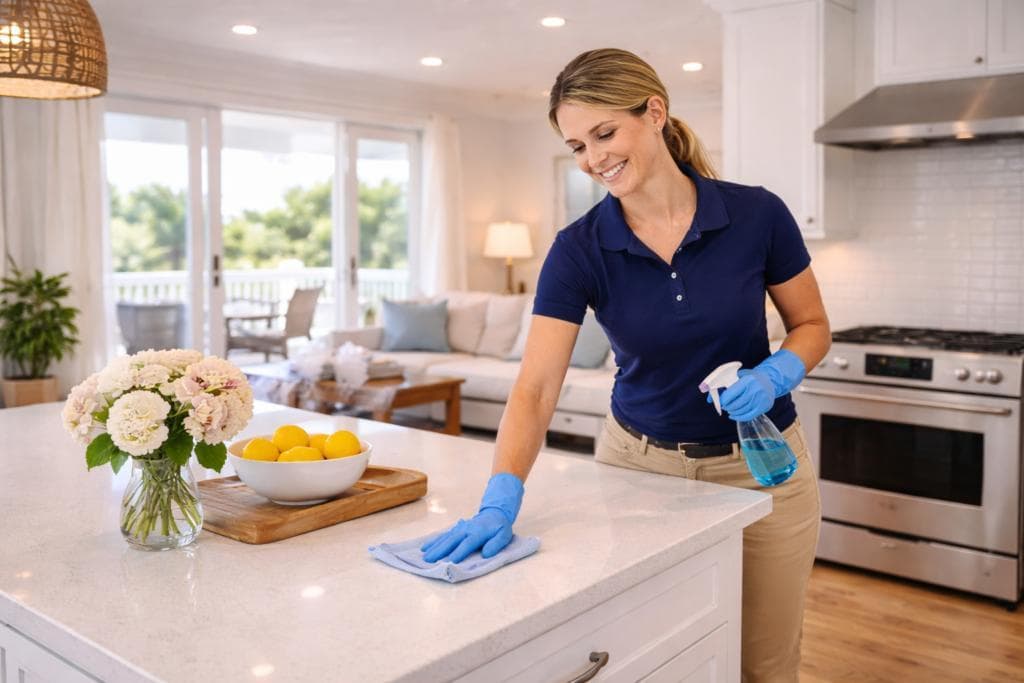
In our experience a deep clean runs about twice a regular clean and can take one to two full days for a large home.
Move-out cleans for monthly and yearly rentals
When a long-term or mid-term tenant moves out, the home is empty and the clean can go further than any deep clean with furniture in place. Add:
- inside the oven, the fridge and every drawer and cabinet
- closets, shelves and laundry areas
- bathroom grout, exhaust fans and behind the toilet
- light switches, outlet covers and door frames
- anything the tenant left behind, bagged and hauled
Photograph each room when you finish, for your records and the owner's. Repairs found during the clean, like nail holes, broken blinds or a running toilet, go to the handyman's move-out punch list.
How often do rentals need a deep clean?
Most vacation rentals benefit from a deep clean one to two times a year, with more for homes that turn over constantly or welcome pets (Lodgify). The slow season is the easy time to book it, when a home can sit empty for a day or two.
Seasonal homes, like mountain cabins and lake houses, have a natural rhythm: a deep clean before the season opens and another after it closes.

Yearly upkeep to book with the deep clean
The deep clean is a good day to catch the jobs that come around once a year. The home is empty and someone is already there:
- Dryer vent. Failure to clean was the leading factor in home clothes dryer fires in 2018 to 2020, at 31% (U.S. Fire Administration). Clean the lint trap every load and have the vent cleaned yearly.
- Smoke alarms. Test them, and replace any that are 10 years past the manufacture date (U.S. Fire Administration).
- Air ducts and filters. Duct cleaning on a schedule, filters swapped more often.
- Pressure washing. Driveway, pool deck, patio and the outside walls.
- Carpets and upholstery. Shampooed, not just vacuumed.
- Paint touch-ups and deck care. Before the busy season photos.
How to bill a deep clean or move-out clean
Record it as its own charge on the property, with the deep cleaning type, so the owner sees it apart from the regular cleans. Because a deep clean costs more, log it before you start: in a free AnyStead account, a charge above your approval amount waits until you record that the owner agreed.
For deep cleans on a schedule, set up a recurring charge on the property, every six months for example. AnyStead records each one on its date and never puts it on an invoice by itself; you still choose what to bill and when, as in charge, invoice, payment. The rest of what belongs on the bill is in cleaning service invoices for rentals.
Bill a deep clean, a move-out clean or a month of turnovers on one invoice. Free.
Free, no account required, no setup call.Frequently asked questions
How often should a rental be deep cleaned?
Most vacation rentals do well with one or two deep cleans a year, often in the slow season, and more if the home turns over constantly or takes pets. Long-term rentals get one at every move-out, and mid-term rentals between longer stays.
What is included in a move-out clean?
Everything in a deep clean, with the home empty: inside the oven, fridge and every cabinet, baseboards and walls, windows, sills and tracks, bathrooms top to bottom, closets, the garage floor, and anything the tenant left behind.
How much more does a deep clean cost than a regular clean?
In our own operation a deep clean usually runs about twice a regular clean and can take one to two full days, but rates vary by home and by market. Agree on the price with the owner before you start, and log it so the approval is on record.
Should a deep clean go on the same invoice as the turnovers?
It can. Put it on its own line with the deep cleaning type and the date, so the owner sees it apart from the regular cleans. If the owner wants big jobs billed separately, invoice it on its own.
Sources
- Deep Cleaning, Lodgify (accessed 29 October 2026)
- Appliance and Electrical Fire Safety, U.S. Fire Administration (accessed 29 October 2026)
- Smoke Alarms, U.S. Fire Administration (accessed 29 October 2026)