
Billing records for rental properties: a practical setup
By AnyStead team · Published · Updated
Short answer
Keep one record per property, log every cleaning, repair and supply cost against it as it happens, and bill each owner from those records on a fixed schedule. That works whether a home rents by the night, the month or the year. Guest taxes are a separate matter, so check the official pages or your accountant.

Rentals come in every kind: vacation homes that turn over several times a week, furnished homes let by the month, and houses on yearly leases. Most operators juggle several owners, a rotating set of cleaners, and vendors for pools, lawns, pest control and repairs. The billing side is where time disappears. This is the setup we use.
One record per property
Start with a list of every property you touch, entered once: the address, the unit if there is one, and who pays for work there. Everything else hangs off this list. If the same house appears as three slightly different names across your invoices, your per-property totals will never add up.
Log costs the day they happen
Turnover cleans and linen runs on the vacation homes, a move-out clean on a monthly rental, an AC service call or a lawn visit on a yearly lease: record each one as a charge against its property the same day. Reconstructing a busy month from texts at the end of it is where mistakes come from.
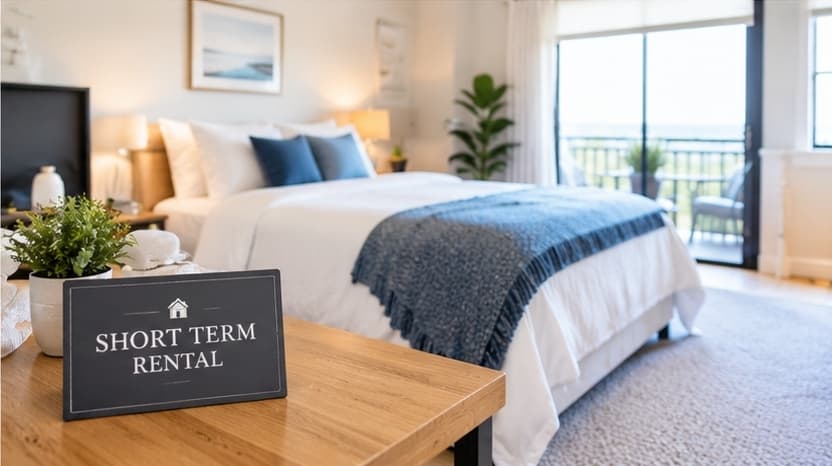
The turnover checklist our cleaners follow is in vacation rental turnover cleaning.
Bill each owner from those records
On your billing day, pull the open charges for each owner and put them on one invoice, with the property on every line. An owner with a vacation home and a long-term rental gets one bill for both. If your portfolio mixes rental terms, see one billing setup for short-, mid- and long-term rentals.
Keep guest taxes separate from your invoices
Many states and localities tax short guest stays, and the rules differ from place to place. Those taxes are about the stay, collected from the guest and filed by whoever is responsible for the rental. Your cleaning and vendor invoices are a different flow. Keeping the two apart in your records makes both easier to reconcile. For how rental income and expenses are treated at the federal level, see the IRS guidance on rental income and expenses.
Licensing and permits for vacation rentals are set by your state and locality. If you are setting up a new rental, check with them first.
Built for exactly this setup. Bill owners per property, free, without an account.
Free, no account required, no setup call.Frequently asked questions
Does the setup change for long-term or mid-term rentals?
Not much. A yearly lease sees fewer cleans and more maintenance and lawn work, and a furnished monthly stay sits in between, but every cost still belongs to a property and an owner. The same records and the same billing day work for all three.
Do my cleaning invoices need to show guest or occupancy taxes?
Guest and occupancy taxes apply to a guest's stay, not to a cleaner or vendor billing an operator. Whether a particular stay or service is taxed depends on your state and locality and on its terms, so confirm with your state or local tax office or an accountant.
Who licenses vacation rentals?
It depends on your state and locality. Some require a state license, some a local permit, and some both. Check with your state and local government before you list a new rental.
How often should I bill owners?
Weekly during a busy season and monthly the rest of the year works for many operators. Long-term rentals usually settle into one monthly bill. What matters most is a schedule the owner can predict.
Sources
- Topic no. 414, Rental income and expenses, Internal Revenue Service (accessed 29 October 2026)